For decades, Japan has combined near-zero interest rates, a weak currency, colossal public debt, and massive capital exports. This framework has helped finance U.S. bonds, international credit, global equity markets, and a multitude of carry trade strategies.
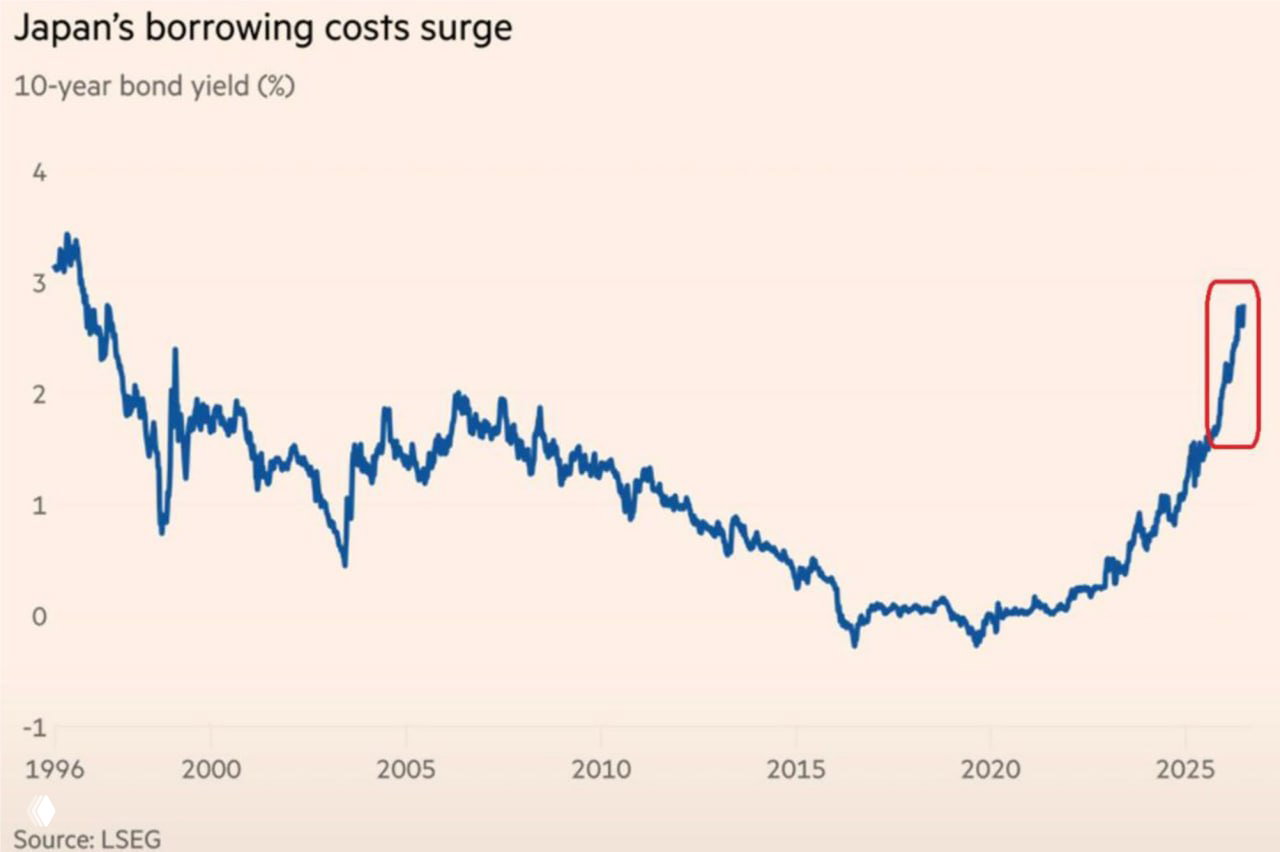
That source is beginning to dry up. The yield on 10-year Japanese bonds now stands at around 2.8%, up from about 1% in 2024, after recently reaching 2.90%, its highest level in thirty years. Yields on 20-, 30-, and 40-year bonds have also surpassed or approached 4%.
Why would a Japanese insurer or pension fund continue to hold such a large amount of U.S. duration when domestic bonds are once again offering nearly 3%?
This is not a theoretical question. Japan remains the largest foreign holder of U.S. Treasuries, with approximately $1,210 billion as of April 2026.
The country also holds trillions of dollars in stocks, bonds, and direct foreign investments. Even a partial reallocation of this capital toward the Japanese market could therefore produce three simultaneous effects:
- a further rise in U.S. yields;
- a reduction in global liquidity;
- and unwinding of yen-funded strategies (and thus a rise in the yen against the USD).