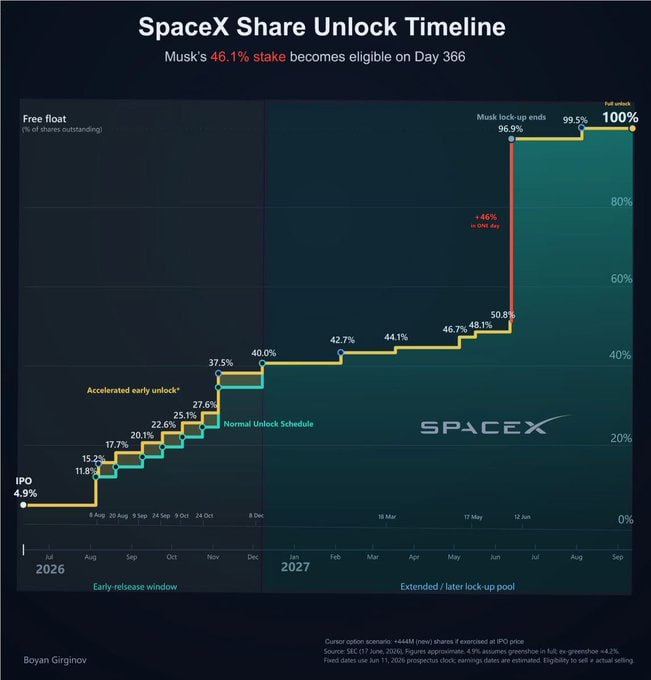
SpaceX enters the first stage of its post-IPO share unlock. The free float is expected to increase from approximately 4.9% to 11.8%, marking the beginning of a phased release schedule that will continue through 2027. In total, up to 911.5 million shares—worth roughly $116 billion at current indicated valuations—will progressively become eligible for trading. Importantly, "eligible" does not mean "sold"; the unlock simply removes transfer restrictions.
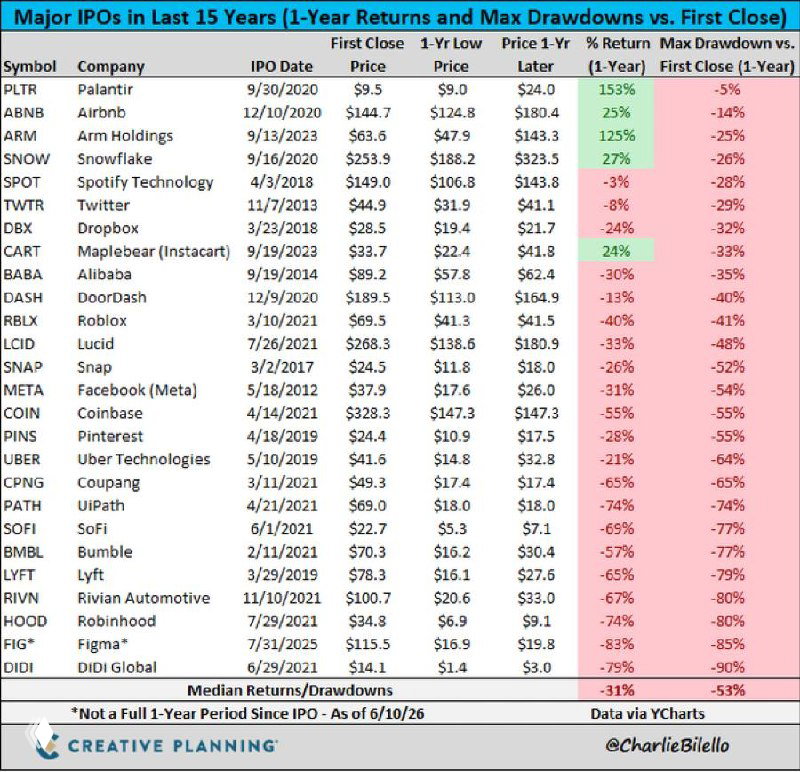
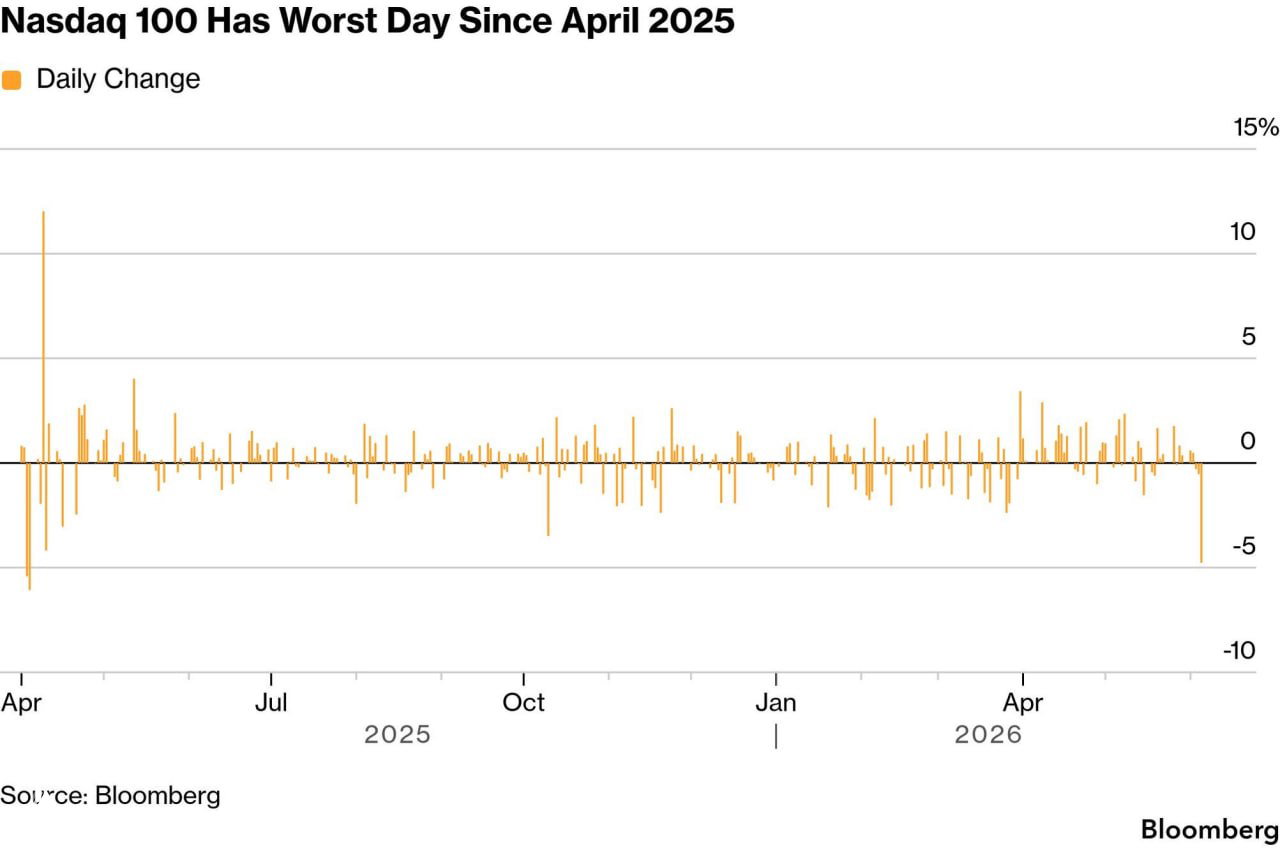
The past week's trading has already demonstrated how markets price these events. Despite strong operating performance, SpaceX shares came under pressure as investors focused on the prospect of significantly higher tradable supply. This is consistent with how equity markets function: prices are determined at the margin. Even if only a fraction of newly unlocked shares is ultimately sold, the expectation of additional supply is often enough to compress valuations before the actual transactions occur. In many IPOs, the anticipation of the unlock has a greater short-term impact than the unlock itself.
The most significant event still lies ahead. The end of Elon Musk's lock-up is expected to increase the eligible free float from 50.8% to 96.9% in a single step, fundamentally changing the stock's liquidity profile. Whether this becomes a buying opportunity or a source of sustained downward pressure will depend on one question: How many shareholders actually choose to sell? The unlock schedule defines potential supply; the market will ultimately determine how much of that supply is absorbed—and at what price.